Restoration of the Parish of San Esteban de Arguedas
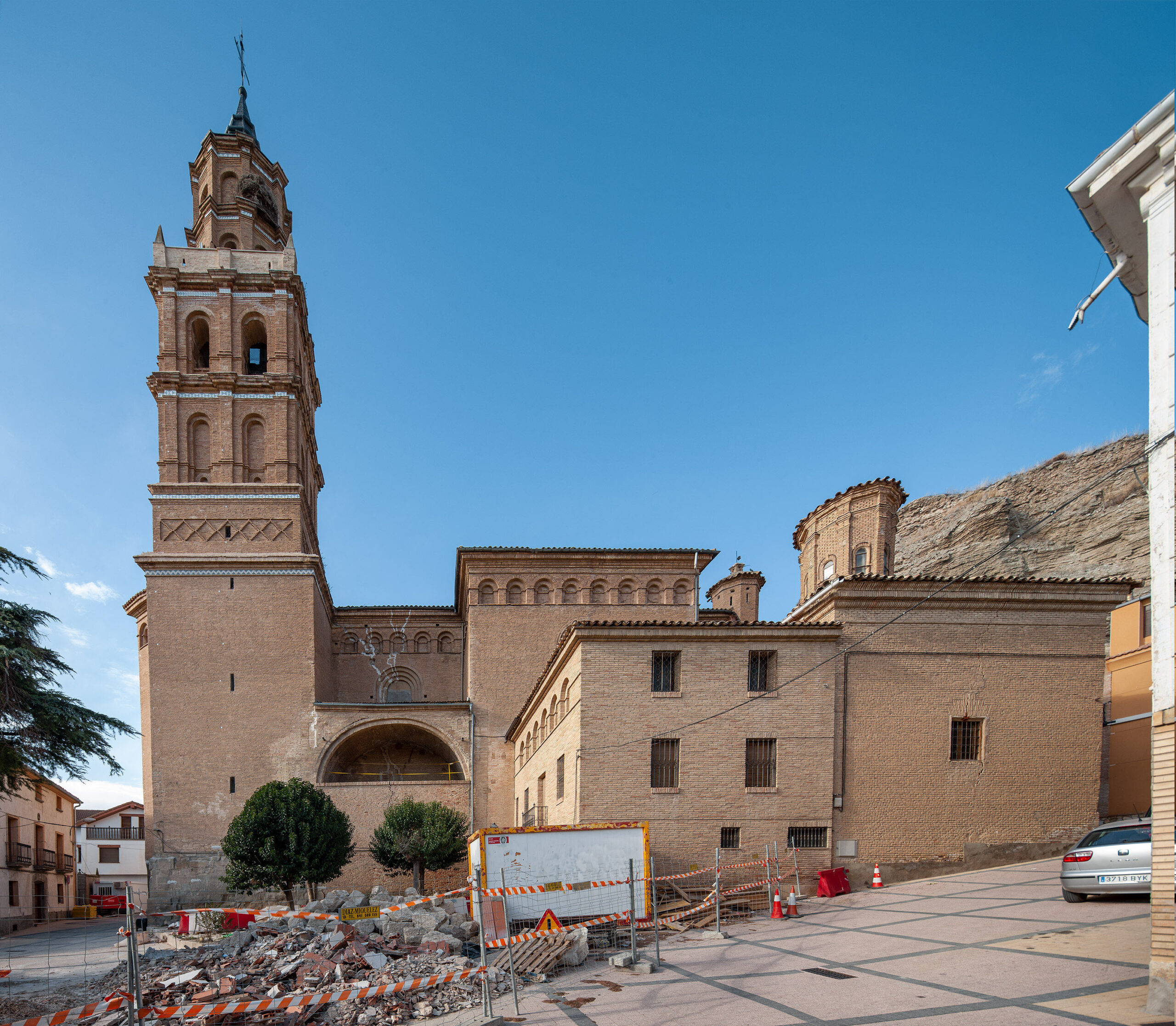
The town of Arguedas is situated in Navarre, Spain. It features a large church, begun in 1560 atop an earlier church and completed around the year 1612.
This large parish church was completed around 1612, having been begun in 1560 atop an earlier church—records of which date back to 1084. This previous structure was already dedicated to Saint Stephen.
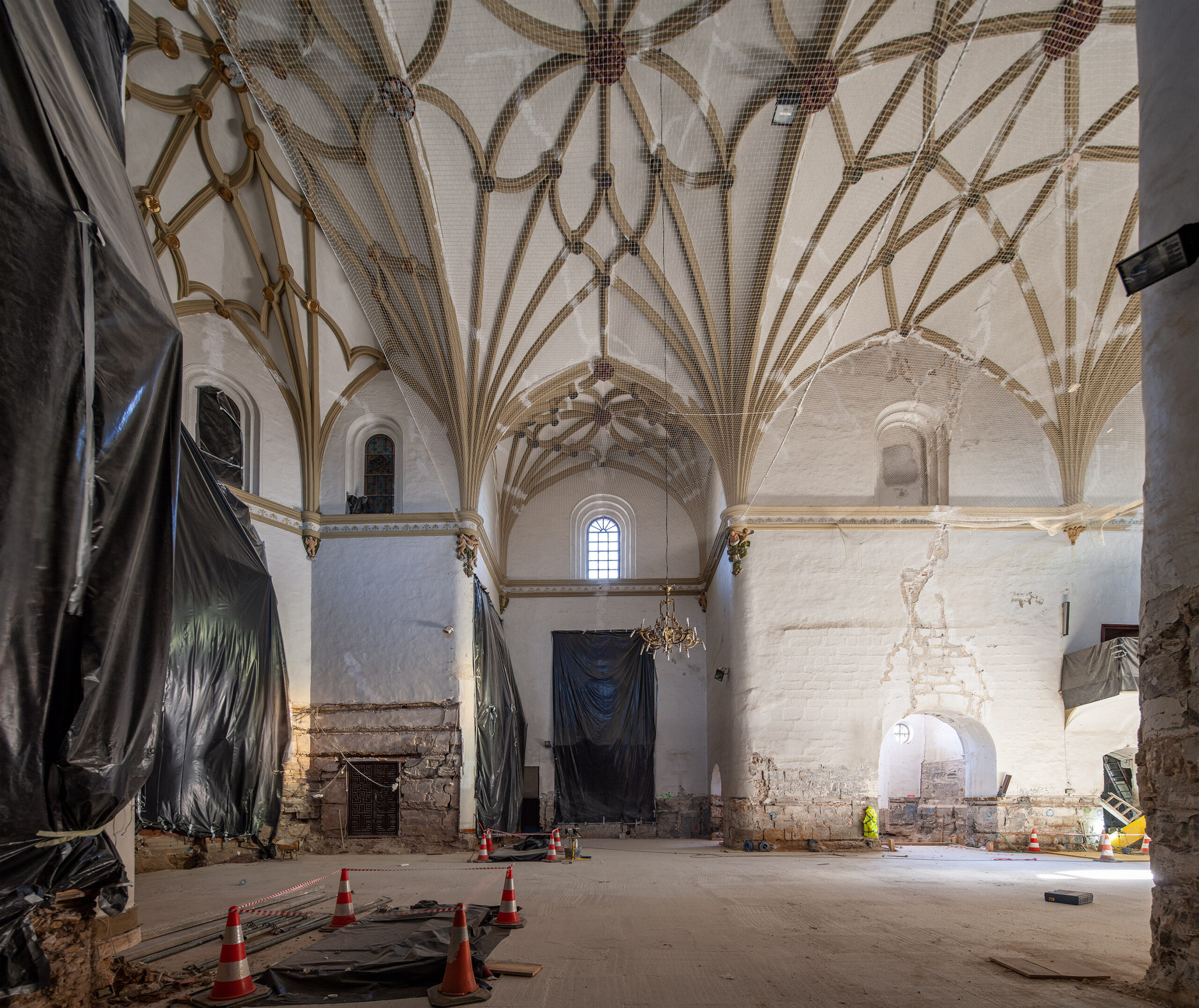
Constructed in the *Reyes Católicos* style, the building represents a transitional phase between the Gothic and Renaissance architectural traditions. Structurally, the church began to exhibit flaws from the very outset. Cracks became visibly apparent throughout the structure—particularly following the construction of the tower—due to the specific characteristics of the subsoil combined with an asymmetrical distribution of structural loads at the complex's southwest corner.
The tower began to tilt diagonally toward the southwest, dragging its adjacent walls along with it. In turn, these walls pulled the entire system of groin vaults along with them.
Over the course of 400 years, the cracks inexorably widened until they measured more than 20 centimeters across, penetrating the entire thickness of the walls.
The walls themselves were constructed using solid brick masonry with a thickness exceeding one meter.
Records exist of previous, failed interventions aimed either at concealing the damage using structurally unsound fillers or at repairing the damage without addressing its underlying causes.
In 2010, work began on monitoring and analyzing the structural pathologies afflicting the building. Subsequently—around 2016—following an incident in which bricks accidentally dislodged from the tower and fell onto a vehicle below, authorization was secured from the property owners to initiate preliminary studies. These studies were intended to lay the groundwork for a project designed to arrest the tower's movement, thereby preventing further damage and, ultimately, averting its collapse.
We commenced our work with a subsoil analysis, followed by the design of a new foundation system, and subsequently, the development of a nearly comprehensive restoration plan for the entire building—encompassing its walls, vaults, towers, stairwells, and flooring. Due to previous work—which served more to conceal damage than to repair it—the vaults and walls presented a great number of surprises. The severity of the overall damage proved to be far greater than anticipated.
Aimed at detecting whether structural movement was ongoing, the successive failed attempts to repair the building succeeded only in concealing the extent and scope of the damage; consequently, they prolonged and expanded the duration and scope of the intervention undertaken following the monitoring program initiated in 2010.
The complex has remained stable for two years (since 2022), having been equipped with a new substructure beneath ground level that has effectively extended the building's total vertical dimension.
Currently, the structure stands 75 meters tall, measured from the base of its foundations to the pinnacle of the tower.
The complex's new structural stability has made it possible to proceed with restoring the original entrance on the south façade and adapting the adjacent plaza to accommodate this new access point.
This latter element—the new entrance on the south façade—is the only part of the intervention that is outwardly visible and identifiable as a new addition. Meanwhile, on the interior, the project entailed a comprehensive renovation of the tower's staircase.