Restoration of a Fortified Church Tower
The restoration of the Tower was accompanied by a project to eliminate architectural barriers to serve six different levels.
Situated in the city center, the San Nicolás fortress tower continues to play a significant role in defining the skyline of the city's historic quarter. It retains its medieval base—a structure that was destroyed, burned, and repaired time and again until the *Privilegio de la Unión* initiated the demolition of the city's inner walls. Subsequently, in the late 19th century, it underwent a historicist-style renovation. Today, the tower stands fully restored and open to the public following a lengthy and sustained restoration process spanning nearly two decades, which began in 2003.
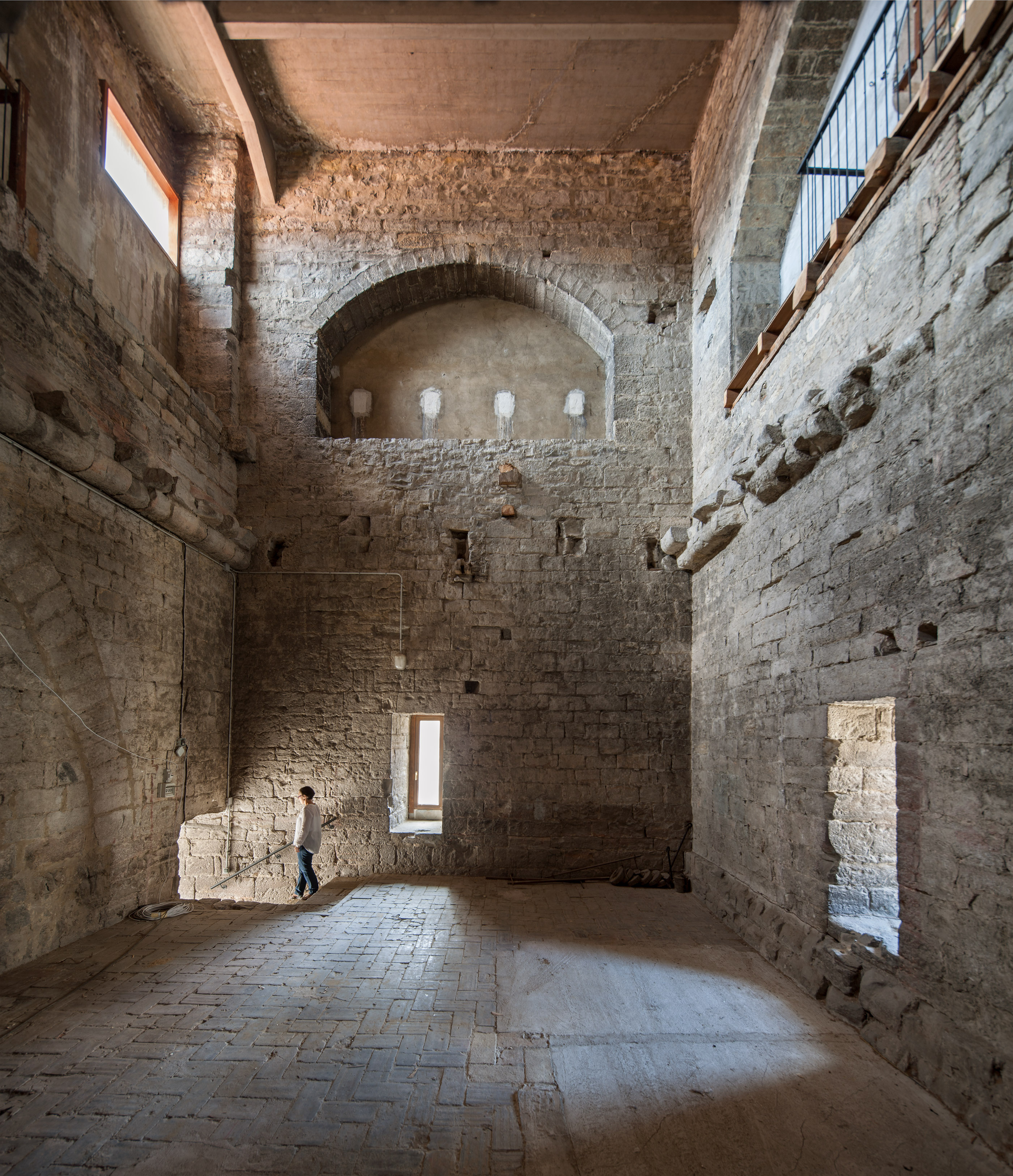
Inside the tower, the work focused primarily on demolishing obsolete, ill-conceived structures that exerted concentrated loads upon the rib vaults immediately below them; the goal was to liberate the interior space and introduce natural light, as the interior had previously existed in near-total gloom. The challenge of introducing natural light without altering the tower's original masonry fabric was resolved by cutting a generous horizontal aperture into an inconspicuous wall section—infilled with a half-brick screen rendered in mortar—located just beneath the historicist battlements added in the previous century.
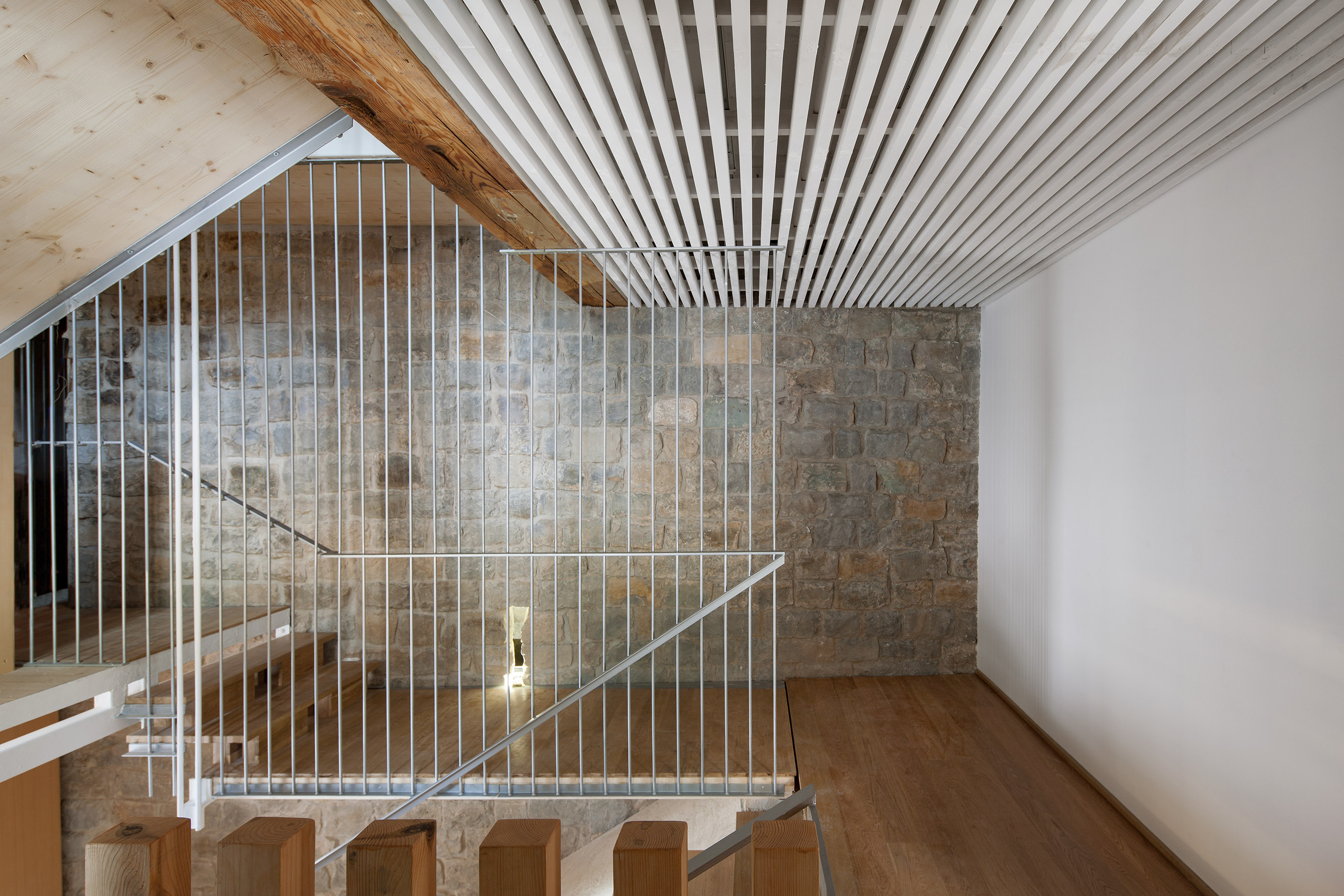
The installation of an elevator within the stairwell shaft necessitated the complete demolition of the pre-existing staircase—dating from the early 20th century—which had previously provided access to ancillary parish facilities, including residential quarters, meeting rooms, and offices.
For the construction of the new staircase, Cross-Laminated Timber (CLT) was incorporated as the structural base for the treads and landings, combined with a supporting steel framework. Designing the layout of the stair flights and landings proved to be an extremely arduous task, owing to the absolute lack of order, symmetry, or proportional consistency in the existing floor-to-ceiling heights and landing levels.
During the construction works, a hidden medieval intramural stair passage was uncovered; this discovery established a viable access route to the tower from the *Paseo de Sarasate*—effectively connecting it directly to the very heart of the city. This revelation compelled us to completely redesign the entire configuration of the steps, landings, steel framework, and elevator access points. Only our colleagues can truly imagine what this kind of setback signifies for an architectural studio fully committed to a project—to its construction, contracting, and development.
Obligation immediately transformed into motivation, and the final result aspires to reflect the enthusiasm with which these works were brought to completion. At the end of the process, we included a simple piece of fired clay depicting a figure in contemplation. We chose to position it facing a powerful influx of southern light that we incorporated into the uppermost level, beneath the roofline. We left the piece as a donation to the parish in 2017.