Magic Dome John-Paul II Chapel
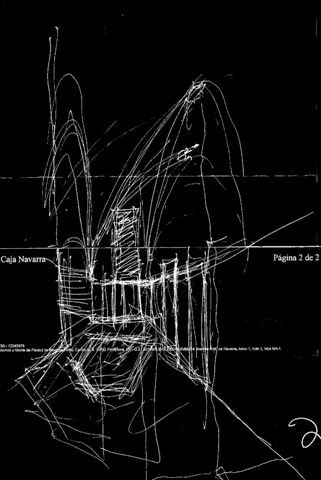
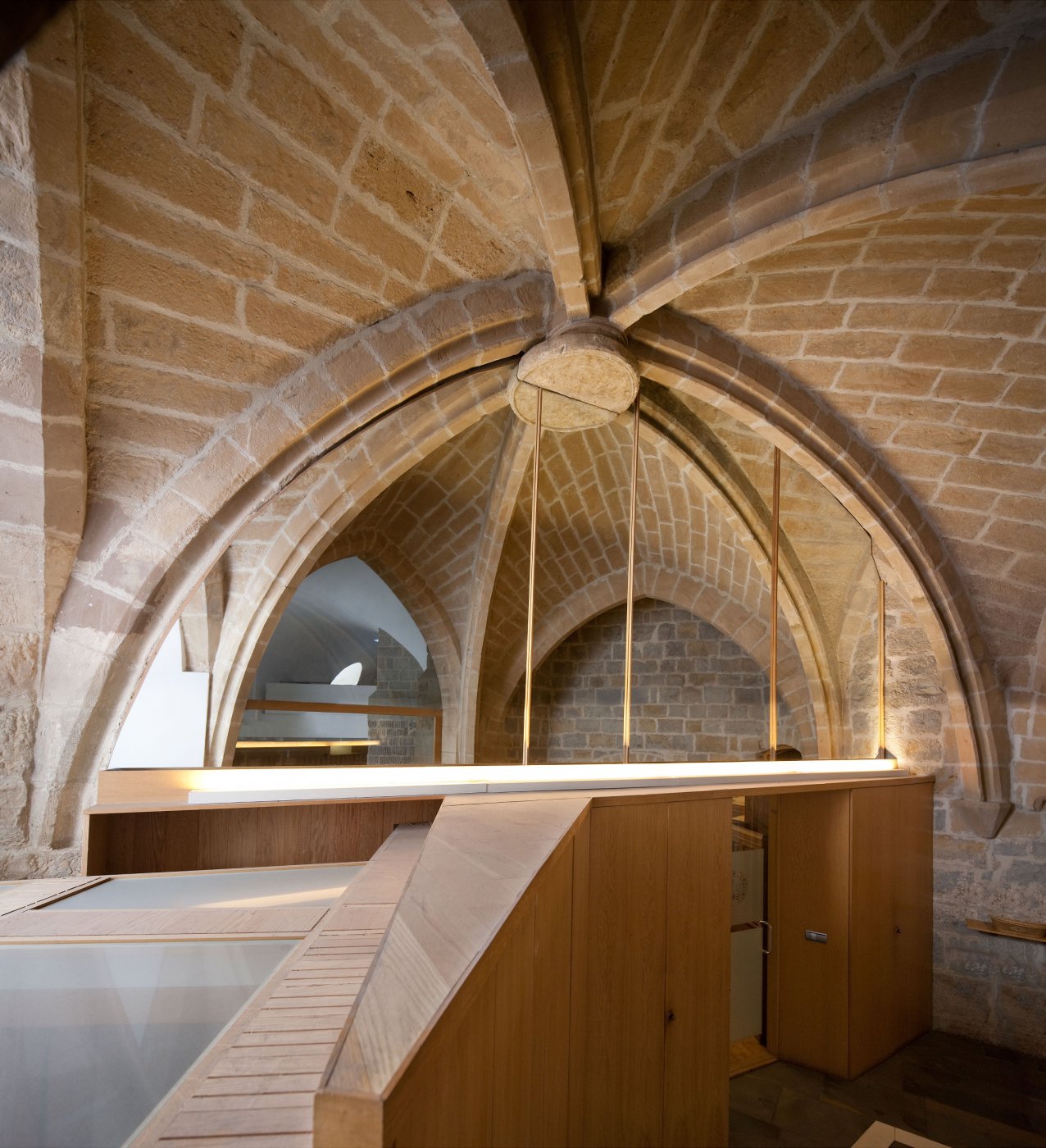
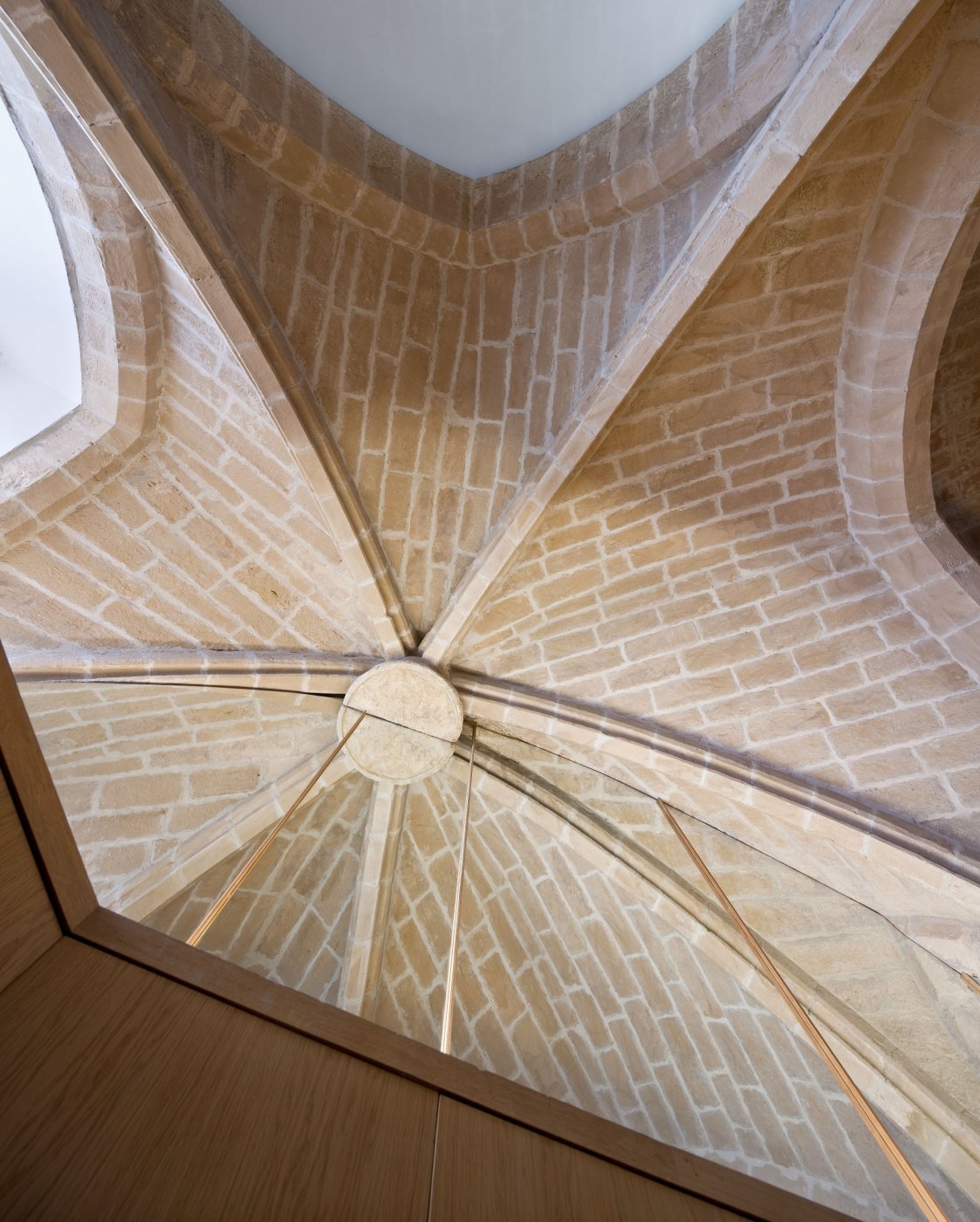
After extensive preliminary work involving the demolition and dismantling of obsolete installations, cabinets, and disused partitions, three complete ribs were uncovered—remnants of what is presumed to have been an earlier Gothic sacristy that was partially destroyed during the construction of the Neoclassical sacristy. The installation of a series of large-format mirrors enabled an artistic recreation of the original vaulted ensemble.
The demolition of later additions and the dismantling of a coal boiler revealed the springing of the original temple's Romanesque apse, along with a system of lunettes adjacent to three complete ribs composed of stone voussoirs. The original dome had spanned the earlier Gothic sacristy—a structure that was partially, yet deliberately, destroyed during the construction of the Neoclassical sacristy.
One might add, with a touch of irony, that the construction of the Neoclassical sacristy reflected methods of "rewriting history"—as well as forms of architectural recycling—that are now widely discredited.
Today, thanks to the installation of a series of large-format mirrors, visitors can enjoy the optical illusion of viewing a complete dome; the ingenious method used to project the lost dome's extension over the adjacent room remains entirely imperceptible to the curious observer.
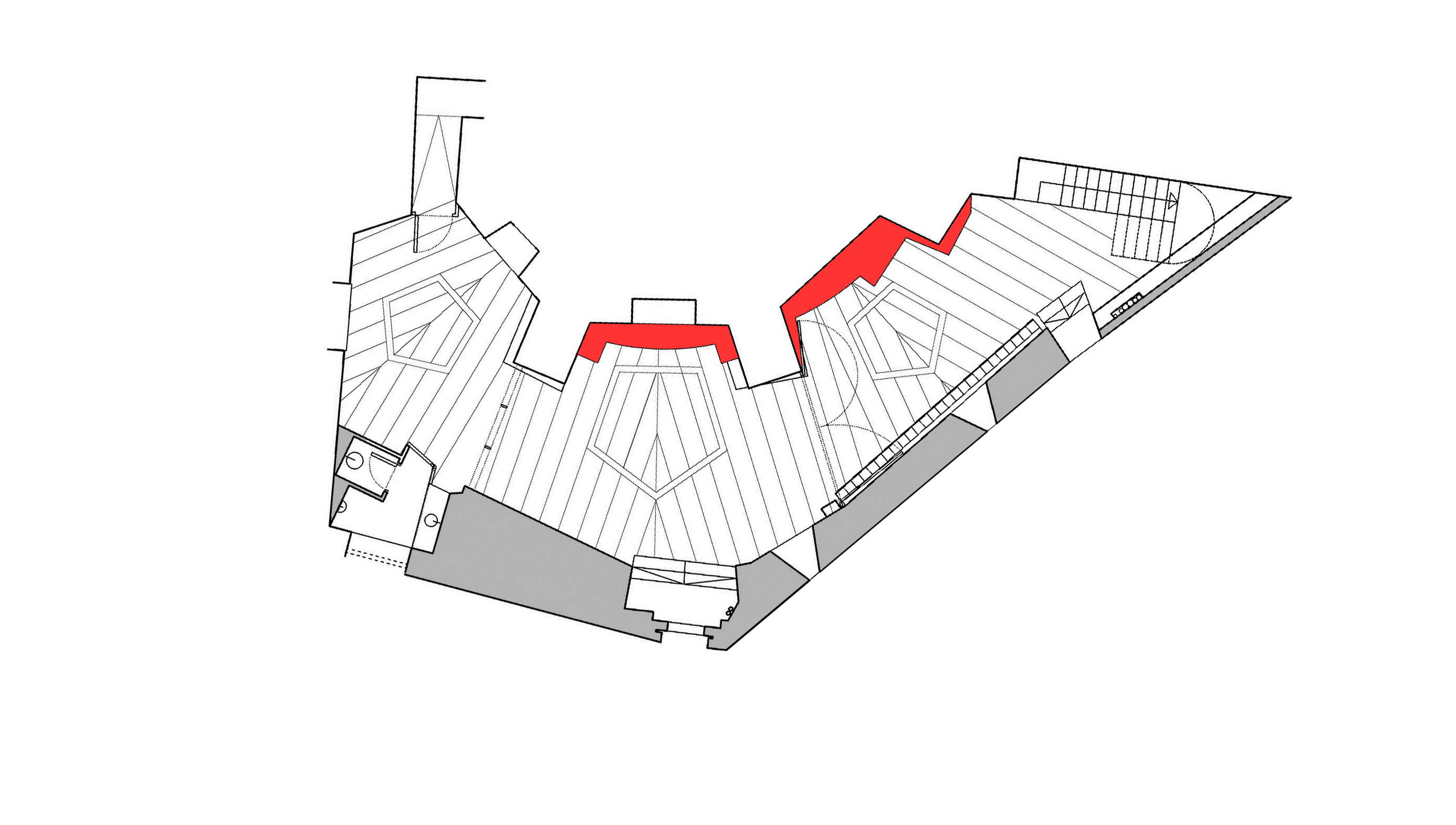
Although the original objective of this project was to equip the rear section of the parish with storage areas, restrooms, and small meeting rooms, everything changed following the archaeological discoveries. The entire project—including the character of the resulting spaces and their intended functions—was completely overhauled; instead of auxiliary facilities, a chapel was created. Subsequently, a dedicated burial chamber was added to the parish—a facility whose success and demand have continued to grow exponentially. These new spaces required new names, giving rise first to the John Paul II Chapel, and later to the Columbariums of Saint Nicholas. None of this would have been possible without the intellect and vision of the parish priest and project sponsor, Santiago Cañardo.
Since 2004, the magic of standing beneath the "complete" dome has remained a captivating reality for every visitor who beholds it.