Design and Fabrication of a Tabernacle
For the Chapel of Saint Ignatius, Jesuit Fathers' College, Pamplona-Iruña, Spain
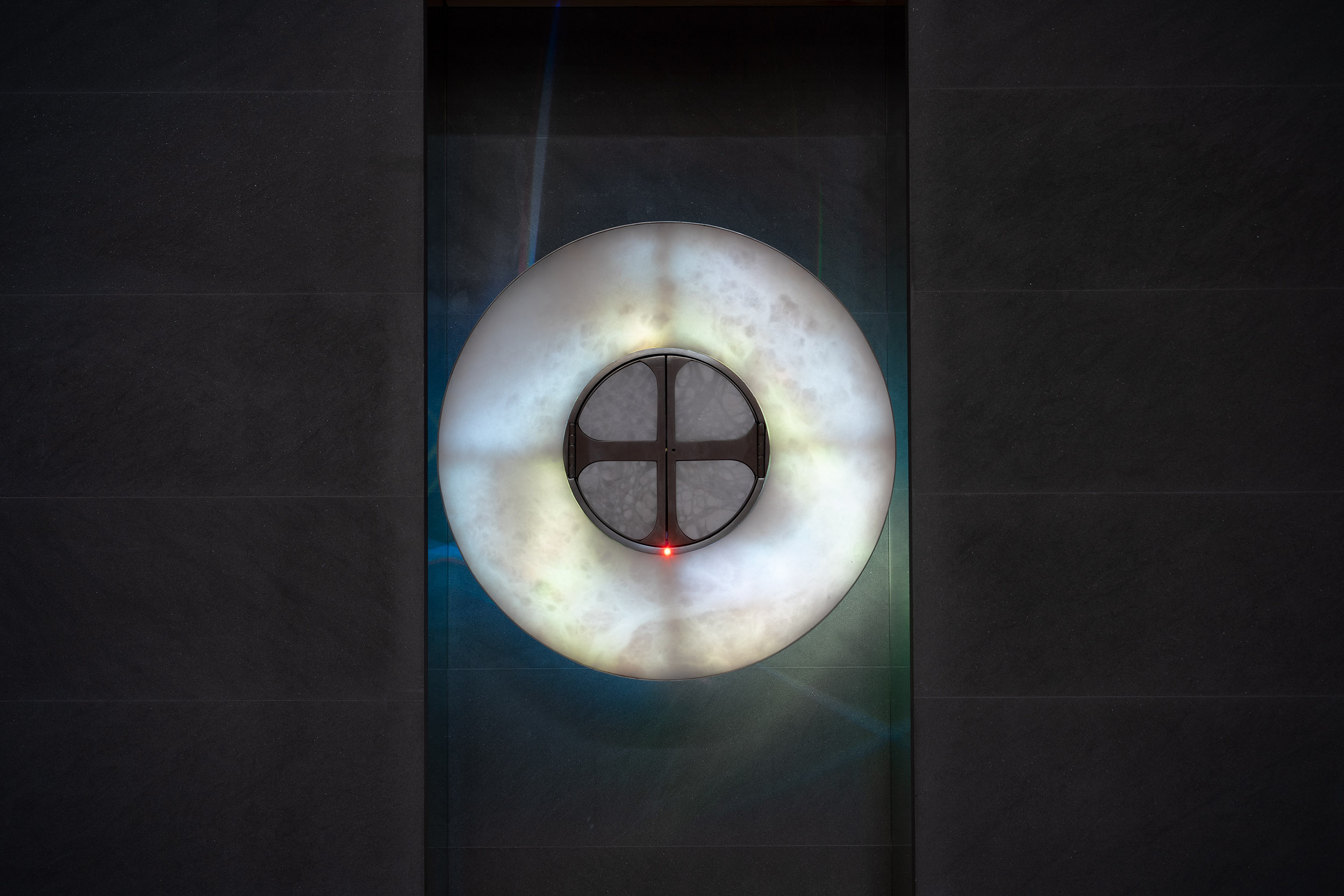
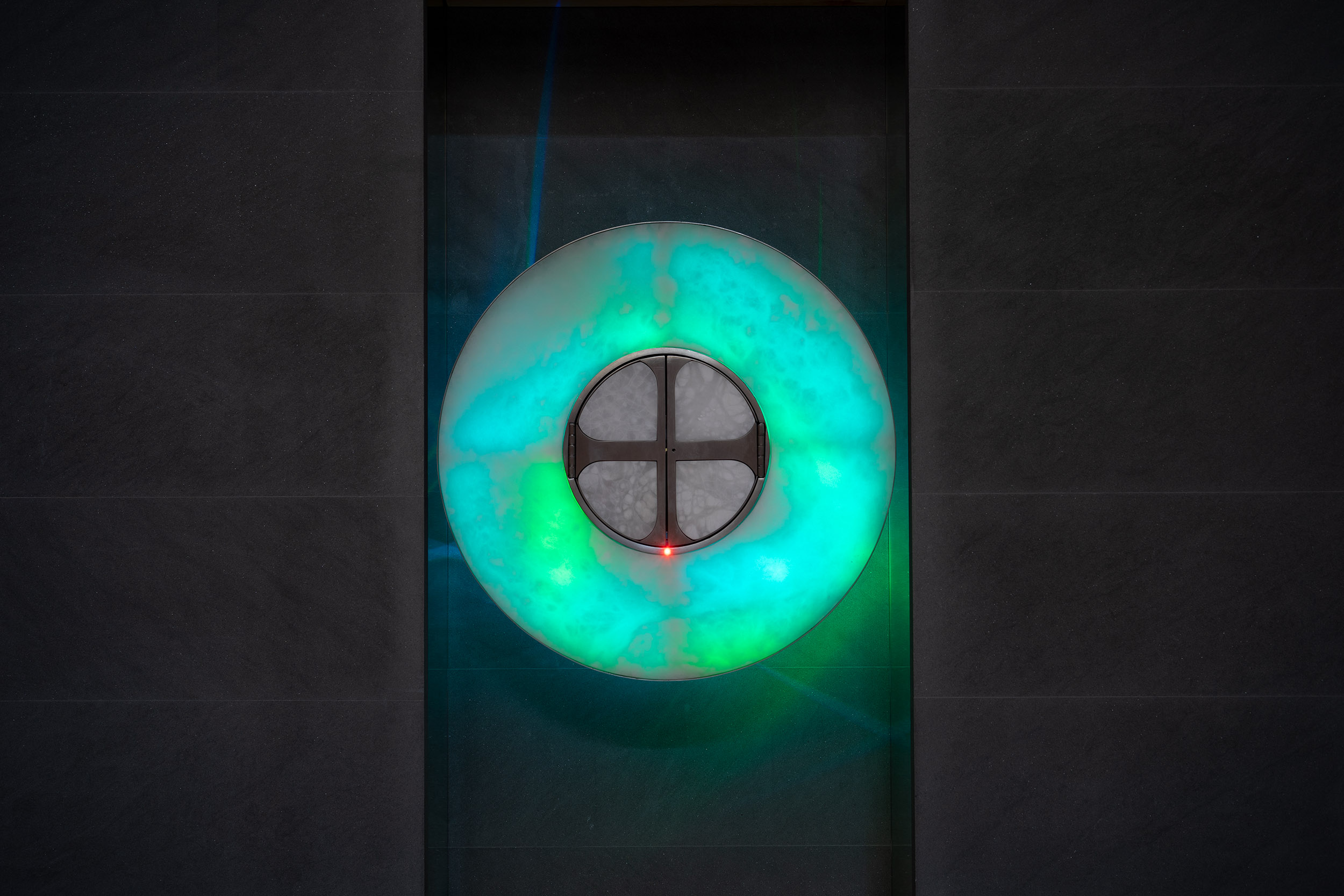
A simple, backlit alabaster ring extends—through the interplay of four shadows—the arms of the Greek cross that seals the Tabernacle, concealing an underlying structure and mechanisms of stainless steel.
It presents itself as a ring of living, ever-changing light. Its capacity to adopt an infinite combination of luminosity, tone, and color allows it to adapt to the specific moment of the liturgical calendar; moreover, thanks to the natural imperfections of the alabaster, it renders a materiality that appears, itself, to be alive. The placement of the Tabernacle within Catholic churches is a pivotal issue in the Liturgy—one that often stirs deep passions, given its fundamental role as a means of expression and as a spiritual compass, helping the faithful orient themselves within the world and in life as they stand before the Great Mystery.